"Is it okay to wash your hair with soap?"
"What are the benefits of washing your hair with soap?"
Actually, washing your hair with soap can improve your scalp environment and resolve scalp issues.
Soap has moderate cleansing power that balances scalp sebum, helping to prevent stickiness and odor from residue.
Additionally, because it contains fewer synthetic compounds unrelated to cleansing, it is less likely to cause problems like rashes and redness.
| However, common alkaline soaps have the problem of opening hair cuticles and making hair stiff. |
Even if your scalp environment is well-maintained, stiff hair can be quite disheartening.
This article introduces chant's shampoo bars, which not only improve the scalp environment and resolve issues but also close hair cuticles to make hair moisturized and shiny, despite being soap.
It also explains how to wash hair with soap, making it recommended for those who think "washing hair with soap seems difficult."
Incorporate soap-based hair washing into your home care routine and achieve your best hair ever.
Two Major Benefits of Washing Your Hair with Soap

There are two main benefits to washing your hair with soap.
・Maintains scalp sebum balance and keeps it healthy
・Avoids irritation from chemical ingredients, gentle on scalp and hair
Let's explain each reason in detail.
Washing hair with soap maintains scalp sebum balance and keeps it healthy
Washing your hair with soap balances scalp sebum.
This is because soap has weaker cleansing power compared to shampoo, preventing excessive sebum removal.
Preventing excessive sebum removal can lead to the following effects:
- Prevents scalp dryness and maintains moisture
- Suppresses excessive sebum secretion
- Maintains natural protection of scalp sebum
Scalp dryness occurs when soap washes away necessary sebum, causing moisture to evaporate from the scalp.
Compared to shampoo, soap does not excessively wash away scalp sebum.
As a result, scalp moisture is maintained, reducing dryness-related dandruff and itchiness.
Conversely, sticky scalp is caused by excessive sebum secretion.
A scalp that has been stripped of necessary sebum will try to replenish it by secreting excessive sebum to restore moisture.
As a result, the scalp becomes sticky.
Both dryness and stickiness are actually caused by an imbalance in scalp sebum due to cleansing.
Washing your hair with soap, with its moderate cleansing power, can balance scalp sebum and improve scalp problems.
Washing your hair with soap avoids irritation from chemical ingredients

Unlike commercial shampoos, soap ingredients have the following characteristics:
・No synthetic surfactants or alcohol used
・Many products do not use preservatives, synthetic fragrances, or silicones
・Many products are made mainly from naturally derived ingredients
People with sensitive skin or allergies may experience itching or redness due to ingredients like preservatives or synthetic fragrances.
Soap has a simple composition with few allergenic ingredients, making it easy for people with sensitive skin or allergies to use.
Since it does not use strong synthetic surfactants or alcohol, it places less burden on the scalp.
Soaps primarily made from naturally derived ingredients work gently on the skin.
For dry or sensitive skin, washing with soap that avoids chemical irritation is recommended.
When washing hair with bar soap, choose a mildly acidic soap with moisturizing properties

Tips for choosing soap
When choosing soap for washing your hair, there are two important points to avoid problems such as stiffness and tangling:
・Choose mildly acidic soap
・Choose soap with moisturizing properties
I will explain in detail why you should choose the above soaps.
Mildly acidic soap to prevent hair stiffness
Hair washed with regular soap often becomes stiff.
This is because the alkaline components in soap open the hair cuticles.
When cuticles open, friction increases, hair loses its flexibility, and it becomes more prone to tangling.
On the other hand, mildly acidic soap helps to close the cuticles.
chant's shampoo bars are mildly acidic soaps made from naturally derived coconut oil.
The cuticles, closed by the shampoo bar, retain moisture and nutrients inside the hair, transforming it into smooth, shiny, and silky hair.
If you have experienced stiff hair after washing with soap, you were likely using an alkaline soap.
Try a mildly acidic soap to experience smooth, tangle-free hair washing.
Moisturizing soap to prevent dandruff and hair loss
To prevent dandruff and hair loss, moisturize to compensate for lost sebum function.
People with dry scalps naturally have less scalp sebum, and washing away sebum can exacerbate dryness, leading to dandruff and hair loss.
For scalp moisturization, soaps containing moisturizing ingredients like oils and creams are recommended.
KIYOME, recommended by chant, is rich in organic argan oil (moisturizer).
It thoroughly moisturizes the entire scalp while cleansing, leaving it feeling supple.
Choose a moisturizing soap to reduce dandruff and hair loss caused by dryness, and keep your scalp healthy.

If you wash your hair with soap, shampoo bars made from natural ingredients and mildly acidic are recommended.
There are two shampoo bar products made from naturally derived coconut oil and mildly acidic:
[Shampoo Bar Product Lineup]
・KIYOME, rich in moisturizing ingredients
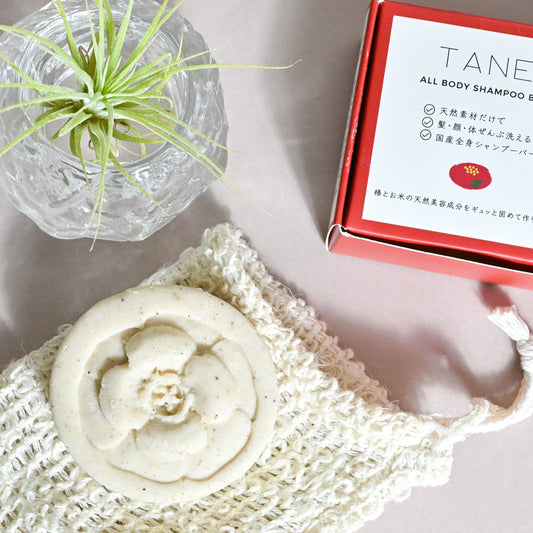
・TANE, with thoroughly removed additives
For those with dry skin concerned about dandruff and itchiness, KIYOME is recommended for its moisturizing effects from organic argan oil (moisturizer) and aged sake lees extract (moisturizer), leaving hair feeling supple.

| KIYOME (1 piece) | 5,200 yen (tax included) | |
| KIYOME (Gift Box) | 7,500 yen (tax included) |
*Shipping nationwide is 650 yen. Free shipping for purchases over 6,000 yen or for specific products. 1 piece is 85g.
- Luxuriously formulated with aged sake lees extract "KOHAKUYUKI"!
- Contains 4 types of beauty oils including argan oil.
- Formulated with deep sea water and natural clay, safe for sensitive skin and delicate areas.
KIYOME was born when the chant representative discovered "aged sake lees extract" and was deeply moved by its effects on the skin after use.
The purifying scent, a blend of Japanese essential oils like sandalwood, benzoin, and peppermint, soothes the mind and body, promoting restful sleep.
For wonderful aging and as a little daily treat, please use KIYOME!

For those with oily skin concerned about greasy scalp, or who want soap with minimal additives, TANE is recommended.

| TANE (1 piece) | 2,480 yen (tax included) | |
| TANE (Gift Box) | 4,700 yen (tax included) |
*Shipping nationwide is 650 yen. Free shipping for purchases over 6,000 yen or for specific products.
- High-quality "Tsubaki oil" is the strongest oil, not only for beautiful hair but also for its anti-inflammatory properties!
- "Tsubaki seeds" containing ingredients that maintain skin health are also fully utilized!
- Safe because it's made from coconut-derived powder, natural clay, etc.
This is a shampoo bar full of love, created for my son's sensitive skin.
For those who say, "None of the commercial soaps suit me!" I highly recommend this! You can wash your hair, face, and body with just this one product.
One "TANE" is 85g and lasts about two months for full-body use, making it excellent value for money!
Who is recommended to wash their hair with soap?
・People suffering from scalp problems
・People with sensitive skin or allergies
・People who prefer simple care
・People with high environmental awareness
People who are likely to feel the effects of washing their hair with soap are those of the types listed above.
I will explain in detail the reasons for recommending it.
People suffering from scalp problems
If you are suffering from problems such as dandruff, itchiness, or stickiness, please use soap.
Soap helps to regulate the scalp's sebum environment and improve these issues.
In particular, if you have oily skin, washing your hair with soap will help suppress excessive sebum secretion and improve stickiness.
Also, for people with dry skin, soap helps maintain an appropriate amount of oil on the scalp, preventing dryness-induced dandruff and itchiness.
If you are struggling with scalp problems, try washing your hair with soap to resolve them.
People with sensitive skin or allergies
If you have ever experienced symptoms like itching or redness after using shampoo, please try soap.
This is because there's a possibility that "something" in the shampoo ingredients is causing your skin problems.
Many soaps do not contain preservatives, artificial fragrances, or artificial colors.
Chant's shampoo bars are free from strong alkaline soap ingredients, petroleum-based surfactants, synthetic fragrances, synthetic colors, mineral oils, silicones, parabens, and animal-derived ingredients.

It uses naturally derived coconut oil as its main ingredient, further reducing skin irritation.
If you have sensitive skin or allergies, please try chant's shampoo bars.
They will help you find a hair washing method that suits you.
Environmentally conscious individuals
Soap is also perfect for people who prefer an environmentally conscious lifestyle.
Soap does not require plastic containers and comes in simple packaging.
Above all, soap is highly biodegradable and has a low environmental impact.
Many people who enjoy camping in nature prefer to use soap.
If you are environmentally conscious, please try washing your hair with soap.
In addition, chant's shampoo bars contribute to water saving because they dry quickly.

You may also want to read
People who prefer simple care
For those seeking simple hair care, soap is a versatile and recommended option.
With KIYOME, which is mildly acidic and highly moisturizing, you can complete your hair wash without conditioner, and it can also double as a body soap and post-bath moisturizer.
Minimalists and those who prefer simple care should try a bath time with soap.
You will surely be satisfied with its simple usability.
Troubles and Solutions When Switching to Soap for Hair Washing

I will explain the common problems and how to deal with them when switching from shampoo to soap for hair washing.
The following problems are common when first using soap:
- Scalp becomes greasy or dry
- Scalp dandruff and itchiness increase
During the process of scalp environment adjustment, until the transition to the new soap environment is complete, the scalp's sebum and moisture balance may be disrupted, leading to various problems.
Knowing how to deal with them will help you transition to soap smoothly.
Scalp becomes greasy or dry
Until the scalp environment stabilizes, the balance of sebum secretion may be disrupted, leading to greasiness or dryness.
This is because the amount of sebum secreted in response to shampoo washing is different from the amount suitable for soap.
Until the scalp gets used to the sebum secretion amount suitable for soap, it may feel like skin problems are occurring.
Until your scalp gets used to soap cleansing, gradually increase the number of days you use soap by interspersing days where you wash with shampoo.
Increased dandruff and itchiness of the scalp
Some people experience increased dandruff and itchiness during the transition from shampoo to soap.
Troubles such as dandruff and itchiness observed during the transition period are caused by an imbalance in the scalp's pH.
Using common alkaline soap can disrupt the scalp's pH balance and cause dryness.
When the scalp dries, it can lead to dandruff and itchiness.
When switching to soap for hair washing, using chant's mildly acidic shampoo bar can balance the pH and reduce troubles such as dandruff and itchiness.
Steps to wash your hair with soap

The steps to wash your hair with soap are as follows:
- Preparation: Comb your hair and wet your hair and scalp.
- Washing: Massage with lathered soap while washing.
- Rinsing: Rinse soap residue thoroughly with running water.
- If using alkaline soap, adjust pH.
STEP1: Comb your hair and wet your hair and scalp
Before washing, gently comb your hair to remove any tangles.
This allows the lather to reach every part of your hair during washing.
It's also important to thoroughly wet your hair and scalp to help the soap lather well.
STEP2: Massage while washing with lathered soap
When washing your hair, focus on the scalp rather than the hair itself to effectively remove dirt.
The effective washing method is as follows:
・Lather the soap sufficiently
・Massage with fingertips
・Wash the scalp primarily, not the hair
Always lather the soap sufficiently before use.
Using a foaming net can help create a lot of fine, rich foam.
If you are using KIYOME or TANE, press the soap directly onto the wet scalp, rotate it 3 times, and then lather it with your hair; it will foam sufficiently.
The aged sake lees extract contained in KIYOME and TANE creates a fine, bouncy lather.
Once the foam is on your head, use your fingertips to wash your scalp as if lifting away dirt.
STEP3: Rinse thoroughly with running water to prevent problems
Thoroughly rinse out "soap scum" with running water.
Soap scum is the white residue formed when soap reacts with calcium and magnesium in tap water.
Soap scum can clog pores and cause dandruff and itchiness.
Key points for rinsing are as follows:
・Rinse thoroughly with running water
・Use lukewarm water
・Rinse down to the hair roots while raking through your hair with your fingers
If you rinse too quickly, soap scum tends to remain.
Rinse thoroughly with plenty of running water.
Water that is too hot can irritate the scalp, so lukewarm water is recommended.
Lukewarm water also opens the pores, making it easier to remove dirt.
Be sure to rinse carefully and wash away both soap and soap scum thoroughly.
STEP4: If you use alkaline soap, finish with a vinegar rinse.
If you want to wash your hair with your existing alkaline soap, please use this in conjunction.
After washing your hair, adjust the pH of your hair with a rinse solution made from vinegar or citric acid.
This helps to close the cuticles that may have opened due to alkaline ingredients, preventing hair stiffness.
Vinegar and citric acid are ingredients found in food, so you can use them with peace of mind.
Here's how to do it:
① Make a rinse solution by diluting vinegar with water.
A guideline is 1-2 tablespoons of vinegar per 1 liter of water.
② Rinse with the solution at the end of your wash.
The key is to apply it evenly throughout your hair and let it absorb.
③ Leave it on for 1-2 minutes.
This allows the vinegar's effects to penetrate your hair.
④ Finally, rinse lightly with water and you're done.
If the smell bothers you, try using citric acid instead of vinegar.
Since it can spoil, please make a fresh rinse solution each time you wash your hair.
To make hair soft, try KIYOME's foam pack

For those concerned about hair stiffness, KIYOME's foam pack is recommended.
KIYOME's highly moisturizing foam pack will make damaged hair soft, moisturized, and smooth to the touch.
The method is simple: just cover your hair with KIYOME foam and leave it on for a while.
For even greater effect, wrap a warm towel around your hair for a hot pack, and it will transform into shiny, moisturized hair.
Please refer to the following article for detailed instructions:
Frequently Asked Questions When Washing Hair with Soap
Here are some common questions about washing hair with soap.
Please use them as a reference when washing your hair with soap.
Is it okay to use on colored hair?
Washing colored hair with soap or regular shampoo carries a risk of color fading.
Especially avoid it immediately after dyeing.
If you have colored hair, using a special shampoo to prevent color fading will help the color last longer.
Consult your hairdresser at the salon where you had your hair colored.
How often should I wash my hair with soap?
This varies depending on individual hair type and scalp condition.
During the transition period from shampoo, it's important to understand that issues such as stickiness, dandruff, and itchiness can easily occur when using soap.
If transitioning to soap, it takes about two weeks for the scalp to get used to being washed with soap and for the scalp environment to stabilize, and for some people, it can take several months.
We do not recommend washing your hair multiple times a day just because you are concerned about stickiness.
While using soap every day is fine, it's a good idea to observe your scalp's condition and use it in conjunction with shampoo initially.
Can I use it with commercial conditioners?
We do not recommend using commercial conditioners with soap.
Even if you wash with soap, which has few additives, using commercial conditioner will still lead to the attachment of additives like silicone.
If you are concerned about your hair feeling stiff, add a slightly acidic soap or a rinse made with vinegar or citric acid to your daily routine.
If you want shiny hair, choose a soap that is rich in oils, like KIYOME.
Summary: Let TANE and KIYOME take care of washing your hair with soap!
There are two main benefits to washing your hair with soap.
[Benefits of washing hair with soap]
・Maintains a healthy scalp by balancing sebum
・Avoids irritation from chemical ingredients, gentle on scalp and hair
On the other hand, washing hair with alkaline soap can lead to problems such as hair cuticles opening and becoming stiff, or an itchy scalp due to dryness and dandruff.
Therefore, when washing your hair with soap, TANE and KIYOME are recommended.
Slightly acidic TANE and KIYOME close the hair cuticles, leading to supple, moisturized hair and a smooth feel.

Recommended for TANE
- People whose scalp sebum balance is disrupted, leading to stickiness and odor
- People who have experienced problems such as itching or redness with soap
Recommended for KIYOME
- People whose scalp is dry and prone to dandruff and itching
- People who want a smooth feel to their hair after washing
- People who want to add body and bounce to their hair and make their hairline less noticeable
Master the key points of washing your hair with soap and solve your scalp problems!
[Which body shampoo bar is better?] Diagnose with the official LINE!

Click here to register as a friend
We also send out the latest campaign information. Please make use of it! (^^)/