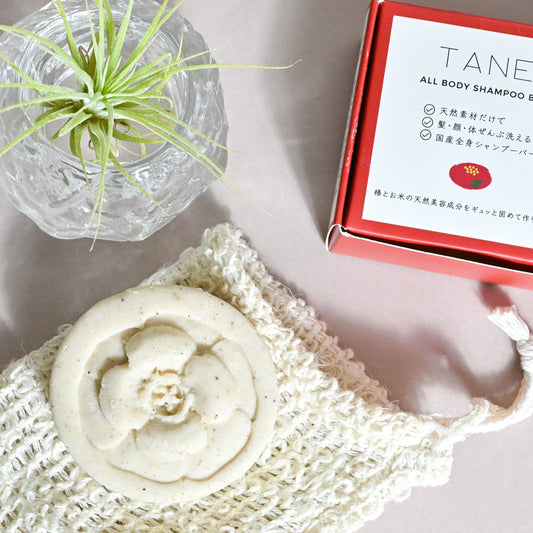
"What is the best body soap for sensitive skin that can be used even with atopic dermatitis?"
"I want a body soap that can soothe my painful symptoms."
For atopic dermatitis, doctors advise keeping the affected area clean, but it can be difficult to know what kind of soap to use.
It's heartbreaking to see children scratching themselves, and you wish there was a soap that could alleviate their symptoms.
According to the "Atopic Dermatitis Treatment Guidelines" by the Ministry of Health, Labour and Welfare Scientific Research Division, improving atopic dermatitis requires simultaneously doing the following three things:
- Identify and eliminate causes and aggravating factors.
- Improve skin barrier function through skincare.
- Pharmacological treatment by a doctor.
This article explains skincare that protects and supplements the skin's barrier function, which is one of the three pillars.
The key to skincare is using soap with the following three functions:
① Mild soap that does not compromise the skin's sebum barrier function
② Low-irritation soap with few substances that penetrate the skin and worsen symptoms
③ Highly moisturizing soap that supplements the skin's barrier function
In the latter half of the article, for those who want to know about recommended soaps, we introduce Chant's "Shampoo Bar," which has the three functions mentioned above.
"TANE," a soap we want people suffering from itchiness and pain to use, and "KIYOME," a highly moisturizing soap recommended for those prone to dryness.
【This article is recommended for:】
- People whose skin feels dry and itchy after a bath
- People who have experienced stinging and irritation from detergents
- People who find daily moisturizing care a bit bothersome
From children to adults, let's use soap correctly to restore healthy skin barrier function and achieve clean, smooth skin.
What is the skin barrier function?

The skin barrier function is an important mechanism that protects our skin.
The skin has two main barrier functions:
・Sebum barrier: Prevents moisture evaporation by sebum
・Ceramide barrier: Cells are tightly packed to prevent irritants from entering from outside
The sebum barrier prevents moisture evaporation, and when ceramids tightly fill the spaces between cells, the skin acts like a brick wall, preventing external substances from entering.
The cells are like bricks, and ceramids are like mortar.
So, what happens to the skin with atopic dermatitis?
What happens to skin with atopic dermatitis

【Progression of uncomfortable symptoms in atopic dermatitis】
- Sebum decreases, and moisture evaporates from the skin (collapse of the sebum barrier).
- Ceramides decrease due to reduced moisture in the skin.
- Gaps form between cells (collapse of the ceramide barrier).
- Irritants enter through the gaps and irritate the skin.
- Unpleasant symptoms such as itching and inflammation appear.
If the above condition continues, itching intensifies, leading to a vicious cycle of scratching.
Scratching further damages the skin and further degrades the barrier function.
Supplement and maintain skin barrier function through skin cleanliness and moisturizing
To break the vicious cycle, moisturizing and cleanliness are essential.
Moisturizing
Retains moisture in the skin as a substitute for the sebum barrier and helps ceramides fill gaps between cells.
Cleanliness
Rinses away substances that cause itching and inflammation.
By moisturizing and cleaning, the skin's barrier function is supplemented and maintained, leading to healthy skin. This helps maintain healthy skin.
Choose a soap that does not damage the skin barrier function

① Mild soap that does not compromise the skin's sebum barrier function
② Low-irritation soap with few substances that penetrate the skin and worsen symptoms
③ Highly moisturizing soap that supplements the skin's barrier function
Avoid alkaline soaps and alcohol-containing soaps that wash away the skin's sebum barrier, and instead use mild, weakly acidic soaps.
Chant's shampoo bars are weakly acidic soaps derived from natural coconut oil, and there are two types:
- "TANE" recommended for sensitive skin prone to stinging
- "KIYOME" recommended for sensitive skin prone to dryness
Let's look at the features of each soap in detail.
TANE, a soap we want people with sensitive skin prone to stinging to use
TANE is a low-irritation soap with few substances that penetrate the skin and worsen symptoms.
The ingredients not included in TANE are as follows:
- Alkaline soap ingredients
- Petroleum-based surfactants
- Mineral oil
- Synthetic fragrances
- Synthetic colorants
- Silicones
- Parabens
- Animal-derived ingredients
TANE was born from the voices of people with skin problems.
It was developed with the aim of gently removing dirt from the skin while minimizing irritation, by carefully selecting only the necessary cleansing ingredients.
If you are troubled by stinging sensations from additives, please try TANE (*).
(*) This does not mean that everyone will experience no irritation. It may sting in inflamed areas.

| TANE (1 piece) | 2,480 yen (tax included) | |
| TANE (Gift Box) | 4,500 yen (tax included) | |
| TANE (3-pack) | 7,380 yen (tax included) |
*Shipping is a flat 650 yen nationwide. Free shipping for purchases over 6,000 yen or for specific products.
- High-quality "Tsubaki oil" is the strongest oil, not only for beautiful hair but also containing anti-inflammatory ingredients!
- "Tsubaki seeds" containing ingredients that maintain skin health are also fully utilized!
- Safe because it is made from coconut-derived powder and natural clay, etc.
This shampoo bar was made with love for my son with sensitive skin.
If you're thinking, "Commercial soaps just don't work for me!" then you should definitely try this! One bar washes your hair, face, and body.
"TANE" is 85g per bar and lasts about 2 months for full body use, offering great value for money!

If you want to know more about TANE, please read this article.
Read also: Explanation of all ingredients in TANE, a full-body shampoo bar made with skin-friendly ingredients
KIYOME, for sensitive skin prone to dryness
KIYOME is a product with a good balance of cleansing power and moisturizing power that replenishes the sebum barrier while washing.
It is made by adding plenty of organic argan oil and aged sake lees extract, which are moisturizers, to TANE.
It envelops the skin in a veil of moisture after washing, leaving it clean and smooth.
For those with mild dry skin without inflammation, KIYOME's moisturizing effect may be sufficient.
It is recommended for people who don't have time to moisturize immediately after a bath, or for children who refuse to have moisturizing cream applied, as it moisturizes while cleansing.

| KIYOME (1 piece) | 5,200 yen (tax included) | |
| KIYOME (Gift Box) | 7,200 yen (tax included) | |
| KIYOME (3-pack)Popular! | 14,000 yen (tax included) |
*Shipping is a flat 650 yen nationwide. Free shipping for purchases over 6,000 yen or for specific products.1 piece is 85g.
- Luxuriously blended with aged sake lees extract "KOHAKUYUKI"!
- Contains 4 types of beauty oils, including argan oil
- Formulated with deep sea water and natural clay, it can be used on sensitive skin and delicate areas
KIYOME was created after Chant's representative was deeply impressed by the skin's condition after using "aged sake lees extract."
The purifying scent, a blend of Japanese essential oils such as sandalwood, benzoin, and peppermint, helps soothe anxieties and promotes restful sleep, providing a holistic sense of healing for both mind and body.
For wonderful aging, and as a small daily treat, please try KIYOME!
If you want to know more about KIYOME, please also refer to this article.
Is it okay not to wash with soap for atopic dermatitis?

There are reports that using soap for atopic dermatitis "improves but does not worsen" symptoms (1).
The Japan Dermatological Association's "Atopic Dermatitis Clinical Guidelines" suggest the following regarding the guidelines for using soap:
【Cases where use should be minimized】
・Severely dry areas
・Seasons when dryness worsens
・When strong irritation is felt from soap cleansing
【Cases where use should be actively pursued】
・Oily skin
・Areas with high sebum secretion
・Areas prone to recurrent skin infections
We introduce a study by Assistant Professor Taisuke Kato of the Department of Pediatrics, University Hospital of Toyama, and others, titled "A study comparing children who use soap every time they bathe with children who use it less frequently" (2).
According to the study, children who used soap less frequently around 18 months of age were more likely to be diagnosed with atopic dermatitis or food allergies at 3 years of age.
In atopic dermatitis, sweat components, dust, and skin impurities cause itching.
Furthermore, it is known that dust mites, Staphylococcus aureus, and fungi that exacerbate atopic dermatitis can be removed by bathing or showering.
It seems that lukewarm water alone may not be sufficient to remove dirt.
Maintain cleanliness by using soap according to your symptoms.
Atopic dermatitis can worsen if you overwash with soap

Over-washing can reduce the skin barrier and potentially worsen symptoms.
This is because it washes away the necessary sebum, worsening dryness and making itching and inflammation more likely.
Let's look at the guidelines for over-washing.
What kind of cleansing is "over-washing"?
The "over-washing" standard varies depending on individual skin condition. Here are key points that people with atopic dermatitis should avoid.
【Points of cleansing that lead to over-washing】
- Vigorous scrubbing of the skin
- Using hot water
- Using strong cleansing soaps
When your skin is dry and flaking white powder, you naturally want to scrub it vigorously to clean it.
However, if you scrub your skin too vigorously, it will become even drier, and your symptoms will worsen.
For cleansing, gently stroke with lathered foam to lift sweat and dirt, then rinse it off.
Water that is too hot can wash away necessary skin oils and induce itching.
Water between 36-40°C is considered ideal for restoring the skin's barrier function (3).
As previously mentioned, synthetic surfactants and alkaline soaps have strong cleansing power and may worsen dryness after washing, so it's best to avoid them.
Use a mild, weakly acidic soap and rinse thoroughly.
Key moisturizing tips for people with atopic dermatitis

Moisturize immediately after bathing.
It minimizes moisture evaporation from the skin and helps supplement the compromised barrier function.
It's good to moisturize within 3 to 5 minutes after bathing.
Applying moisturizer twice, once in the morning and once after bathing at night, is more effective than once a day.
Also, people with atopic dermatitis should aim to moisturize their entire body.
This is because areas that appear normal may also be dry, and it is expected to have a preventive effect against dryness.
For those who find it bothersome to moisturize their entire body every time due to mild dryness, or for children who refuse to apply moisturizing cream immediately after bathing, using a highly moisturizing soap like KIYOME can make moisturizing easy.
Summary: Keep affected areas of atopic dermatitis clean with soap to alleviate uncomfortable symptoms
To improve atopic dermatitis, the following three things must be done in parallel:
- Identify and eliminate causes and aggravating factors.
- Improve skin barrier function through skincare.
- Pharmacological treatment by a doctor.
In parallel with identifying the cause and pharmacological treatment by a doctor, continue daily skincare at home to clean the affected area and improve barrier function.
To protect and supplement the skin's barrier function, use soap with the following three functions for skincare:
① Mild soap that does not compromise the skin's sebum barrier function
② Low-irritation soap with few substances that penetrate the skin and worsen symptoms
③ Highly moisturizing soap that supplements the skin's barrier function
Chant's shampoo bar is a weakly acidic soap made by removing ingredients that irritate the skin.
TANE, created to meet the demands of people with skin problems, is a soap that we want sensitive skin users who say "my skin stings when I wash with soap" or "I want to choose a soap with fewer additives" to try.
KIYOME, which is TANE packed with moisturizing ingredients, helps with skincare for sensitive skin users who say "it's bothersome to moisturize my entire body every day" or "my child dislikes and won't let me apply moisturizer immediately".
For red, inflamed lesions or those suspected of bacterial infection, medical treatment is necessary before moisturizing.
For atopic dermatitis, continue appropriate daily skincare in parallel with treatment by a doctor to alleviate uncomfortable skin symptoms.
2)Association of soap use when bathing 18-month-old infants with the prevalence of allergic diseases at age 3 years: The Japan Environment and Children's Study
3) Effects of Skin Surface Temperature on Epidermal Permeability Barrier Homeostasis
【First-time purchasers only】Coupon distribution in progress!

☆How to get your coupon☆
- Add CHANT as a friend on LINE
- Receive the coupon code
- Enter the code on the official website's purchase screen to apply the discounted price