Can you really call it "ethical"?
The term "ethical cosmetics" has been heard a lot recently. But isn't it true that very few products can truly be called "ethical" if they're just cute packaging or merely natural-looking?
・Where and by whom were the ingredients produced?
・Are those ingredients sustainable?
・Are they giving back value to the local community and society?
・Are they truly gentle on the user's skin and mind?
CHANT is committed to "ethical products that speak for themselves through their content, not just their appearance." At the heart of this are traditional Japanese ingredients.
"Traditional ingredients" – do they sound old-fashioned? No, they're actually cutting-edge.
CHANT uses authentic ingredients passed down through generations across Japan.
Japanese camellia seed husks (Toshima, Tokyo)
→ Contains natural oil components excellent for anti-inflammatory and moisturizing properties
Aged sake lees extract (Tsuruoka City, Yamagata Prefecture)
→ Supports skin cell turnover through fermentation, brightens and moisturizes
Epsom salt (Ako City, Hyogo Prefecture)
→ Rich in minerals, softens skin, and contributes to moisturizing and blood circulation
Deep-sea water (along the Sea of Japan coast)
→ Rich in minerals, supports barrier function and protects moisture
Precisely because they are traditional ingredients, they are simple, effective, and have a low environmental impact.
Perhaps now, more than ever, "returning to nature instead of technology" can be considered the most advanced choice?

Why we're committed to the "origin of ingredients" that contributes to regional revitalization
The ingredients used by CHANT are local resources from within Japan.
These are all ingredients rooted in their respective regions, such as camellias from Toshima carefully cultivated without pesticides, and aged sake lees produced by a sake brewery with a 400-year history.
CHANT prioritizes creating new value through collaboration with local communities, rather than simply "procuring" raw materials.
This is an approach to a "circular economy" that also leads to regional revitalization and the continuation of traditional industries.

"Using ingredients without waste" = The philosophy of upcycling
CHANT's products are created with the philosophy of "utilizing the entire life of an ingredient."
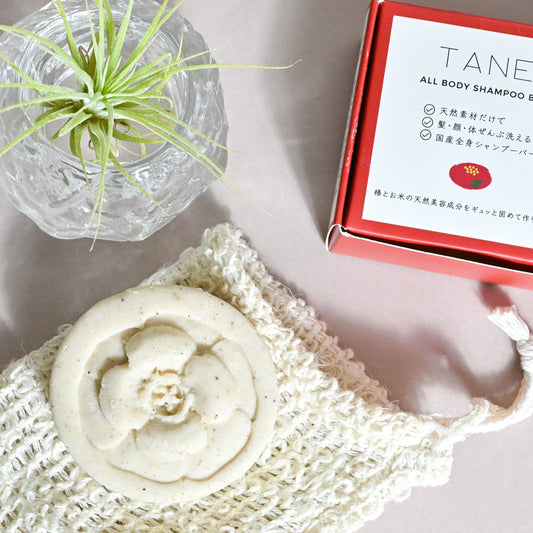
・Not just camellia oil, but using the seeds and skin whole (TANE)
・Elevating sake lees from a byproduct to a luxurious beauty ingredient (KIYOME)
・Transforming grape pomace after wine pressing into marshmallows (Wa Mauve)
From "wasteful" to "premium."
Upcycling is a Japanese aesthetic and the very identity of CHANT.

Voices from actual users
"The ingredients are simple, and knowing they're Japanese gives me a sense of security." (Woman, 30s)
"I was impressed that such skin-friendly products could be made through upcycling." (Woman, 40s)
"The charm lies in the fact that 'there's a reason for its gentleness.'" (Woman, 40s)
Summary | Cosmetics you can love for their background as well as their ingredients
CHANT products are not just "gentle on the skin."
They tell a story of where their ingredients come from, who made them, and how they were delivered.
They are cosmetics you can love for their entire background.
・Petroleum-based synthetic ingredient-free, primarily plant-derived
・Local resources from across Japan × artisan craftsmanship
・New manufacturing that connects to a circular economy and regional revitalization
This is CHANT's definition of "ethical."
We hope you resonate with it.

You might also like to read